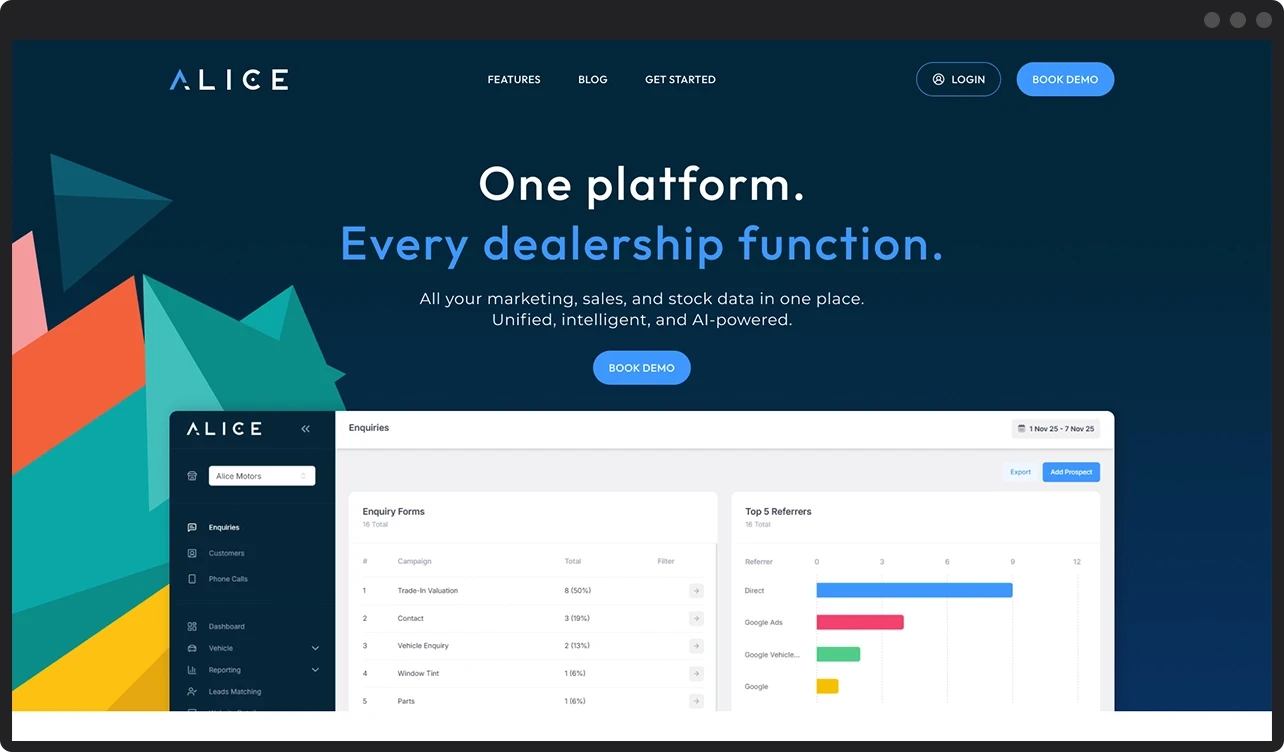
Alice is a high-performance AI platform built to consolidate marketing, sales, and inventory data for over 800 dealerships. I was tasked with designing the marketing site that sells this platform—taking a complex, data-heavy product and making it look modern, accessible, and essential to a dealer’s bottom line.
The Challenge
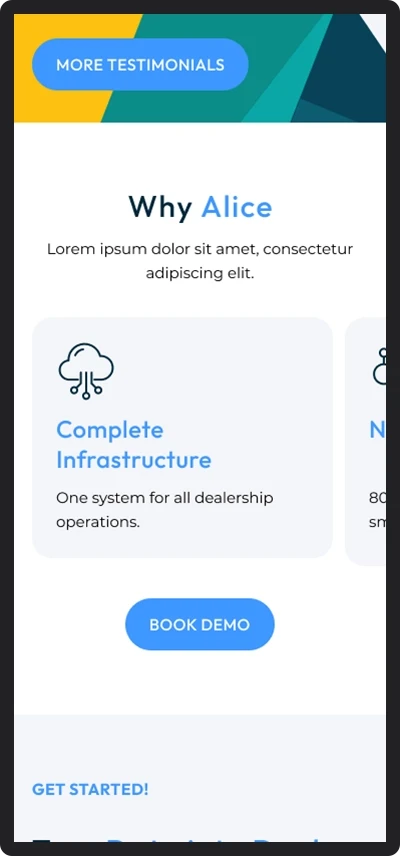
The biggest hurdle was moving away from the dry, uninspiring "data-heavy" look that plagues most B2B software. I wanted to steer Alice into a space that felt much more engaging—using bold headings, abstract shapes, and minimal, punchy text to showcase the platform’s power without overwhelming the user.
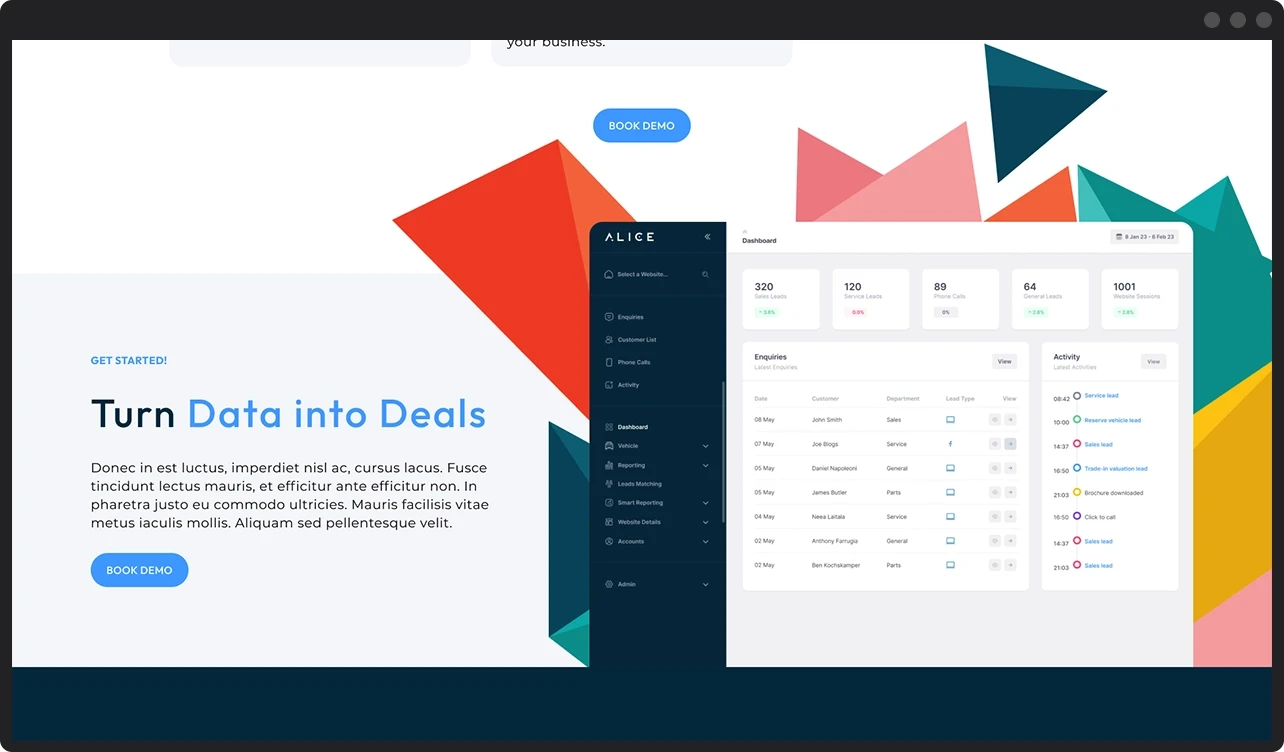
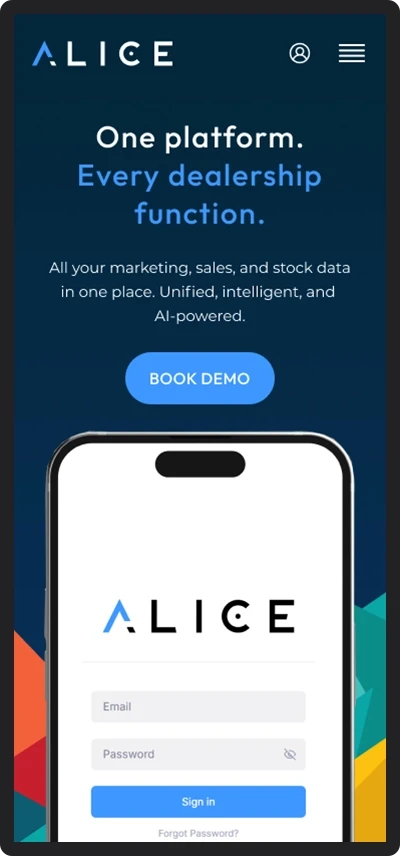
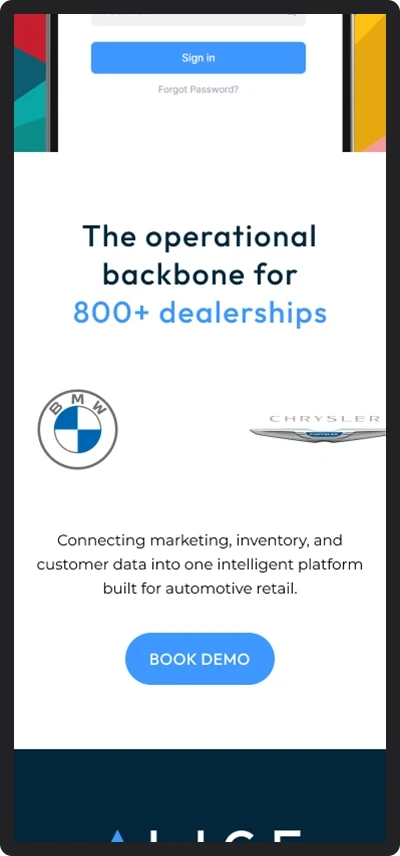
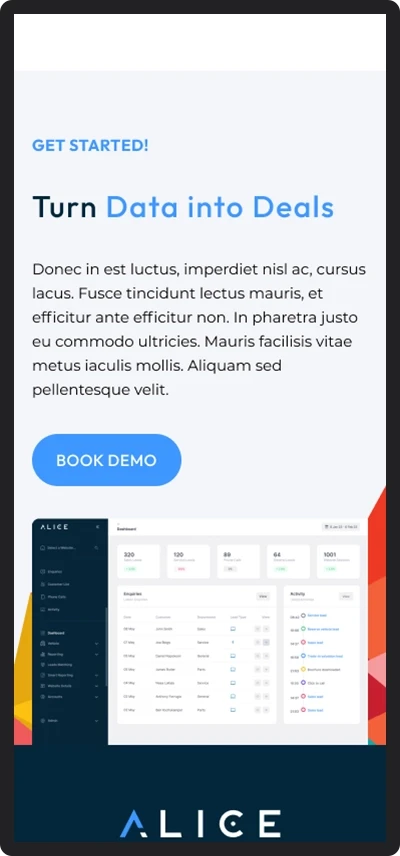
A secondary challenge was creating a visual bridge between the marketing site and the platform itself. The internal app is very data-driven and functional, but it featured a unique abstract shape on the login screen. I decided to pull that element out and use it as a hero background across several sections of the website. This simple move helped unite the two environments under one cohesive brand identity.
I needed to design a layout that felt high-end and 'full' even when content was light. By using a more editorial layout with generous spacing and large-scale typography, I ensured the site felt premium regardless of how much technical copy was available at launch.
Project Goals
I wanted to make the site feel approachable and actually a bit of fun, moving away from the stiff, boring layouts you usually see in B2B software.
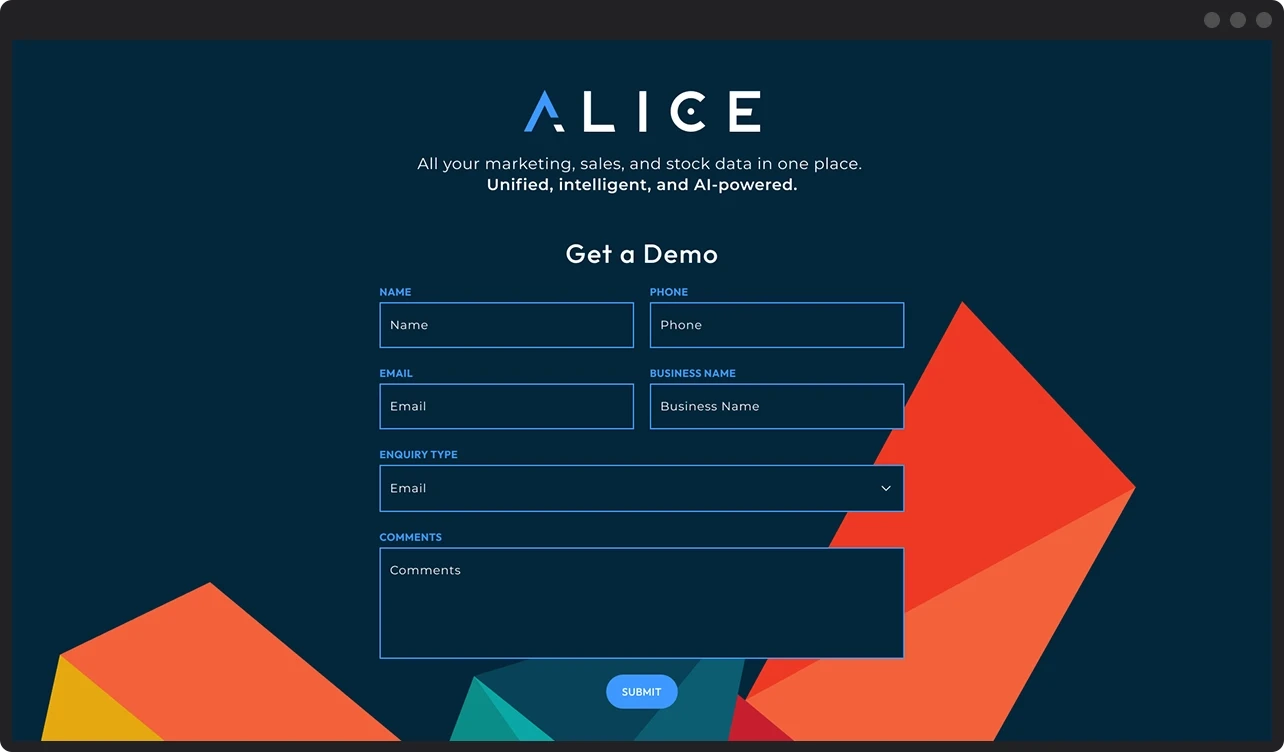
The main goal was to turn interest into action, creating a clear path for dealers to enquire about the Alice AI platform.
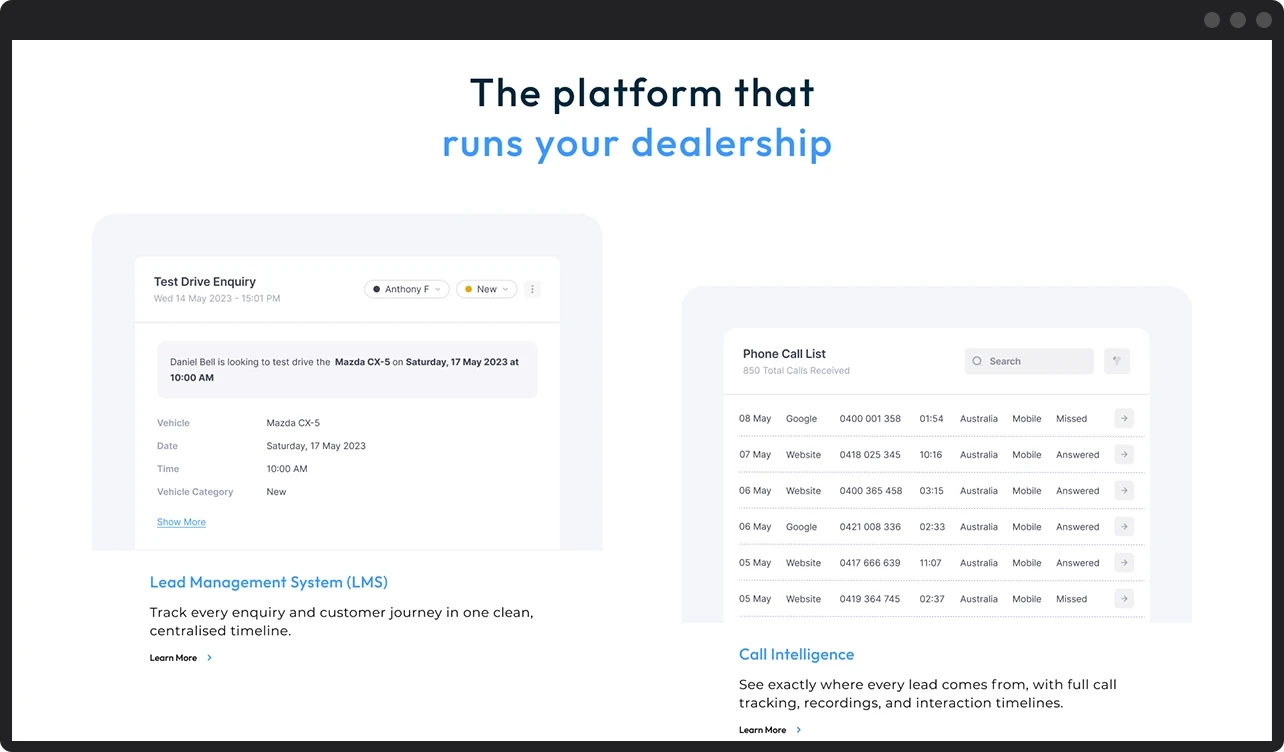
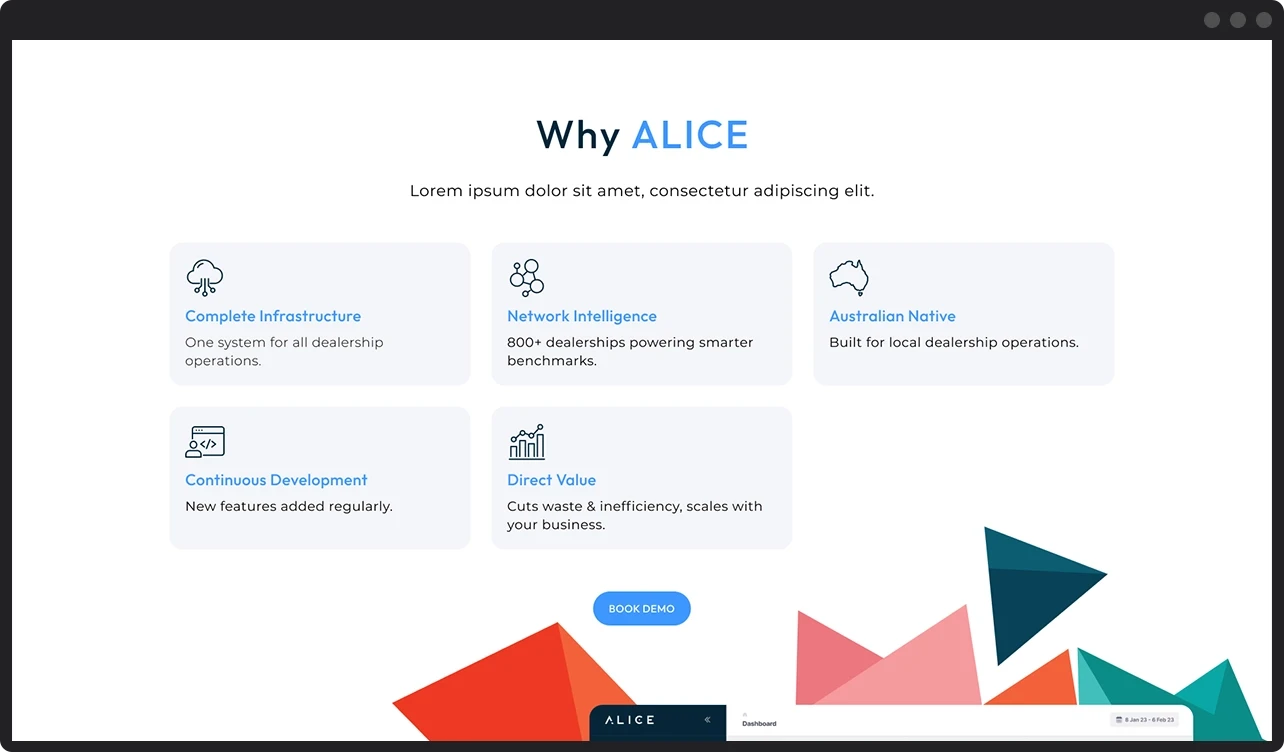
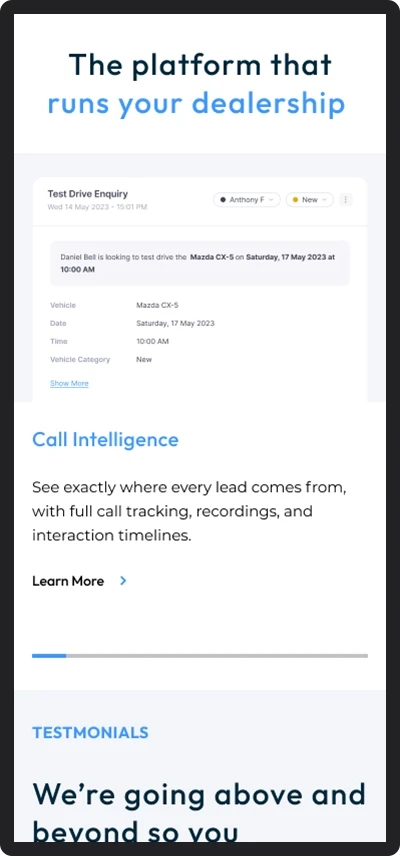
I used a strong visual hierarchy to break down exactly what Alice does, making sure the benefits were obvious at a glance rather than buried in technical jargon.
To make the transition from the marketing site to the app feel seamless, I brought across visual elements like the abstract shapes and background styles. It now feels like like one unified brand.
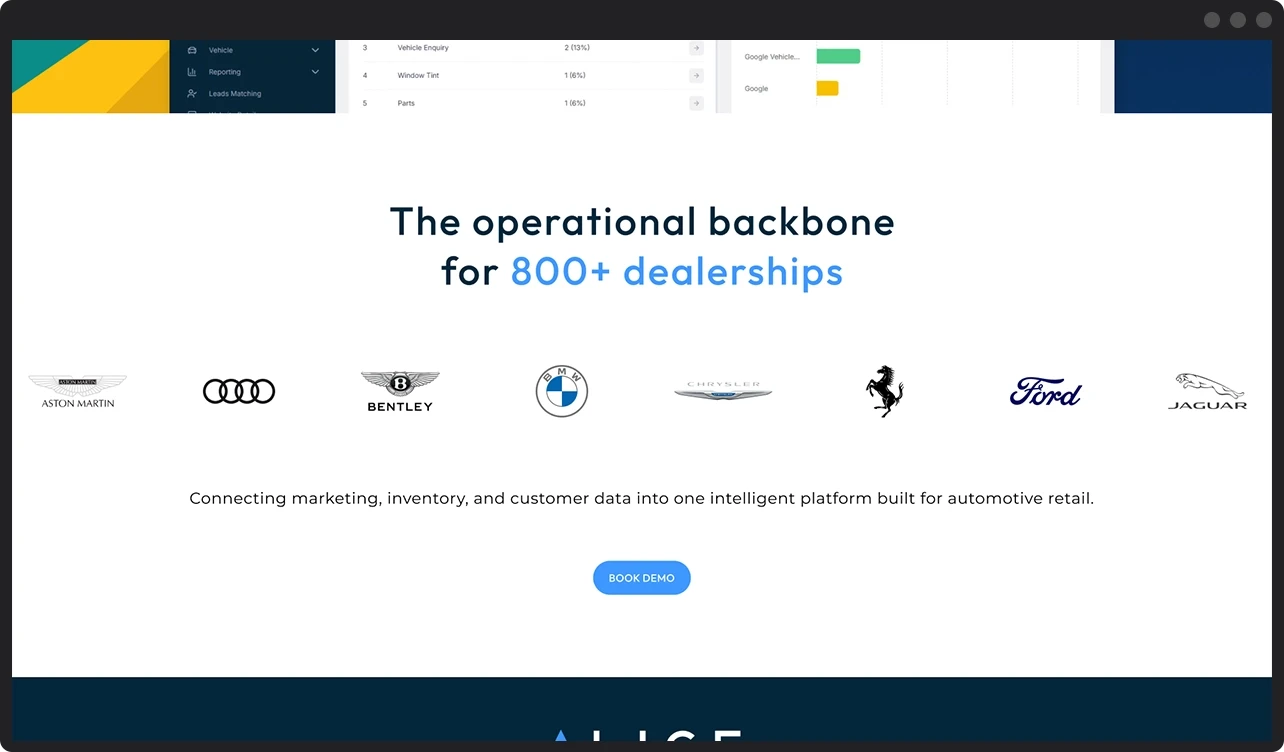
I wanted to position Alice as the essential operational backbone for a modern dealership, using bold data visualisations to prove its value.
I built a modular layout that could house deep content and data stories, ensuring the site had room to grow as the platform's features expanded.
System Logic
Primary - Light Backgrounds
Button Text
Hover
Button Text
Primary - Dark Backgrounds
Button Text
Hover
Button Text
Colour Palette
Role: Primary colour highlights in headings and buttons
Role: Hover colour used for primary buttons
Role: Primary colour dark backgrounds
Role: Used for Copy
Role: Primary colour for backgrounds, and for copy and the logo on dark backgrounds
Light Blue/Grey #F3F5F9
Role: Used for light coloured backgrounds
Complete Infrastructure
One system for all dealership operations.
Network Intelligence
800+ dealerships powering smarter benchmarks.
Australian Native
Built for local dealership operations.
Showcase
Key Takeaways
Making Data Human
I leaned into a really clean, high-end look for the site to show that a massive AI platform doesn't have to look dry or boring to be powerful. It was all about using the right amount of white space and clear visuals to make the tech feel approachable and easy to wrap your head around, rather than something intimidating or overly complicated.
Showing, Not Telling
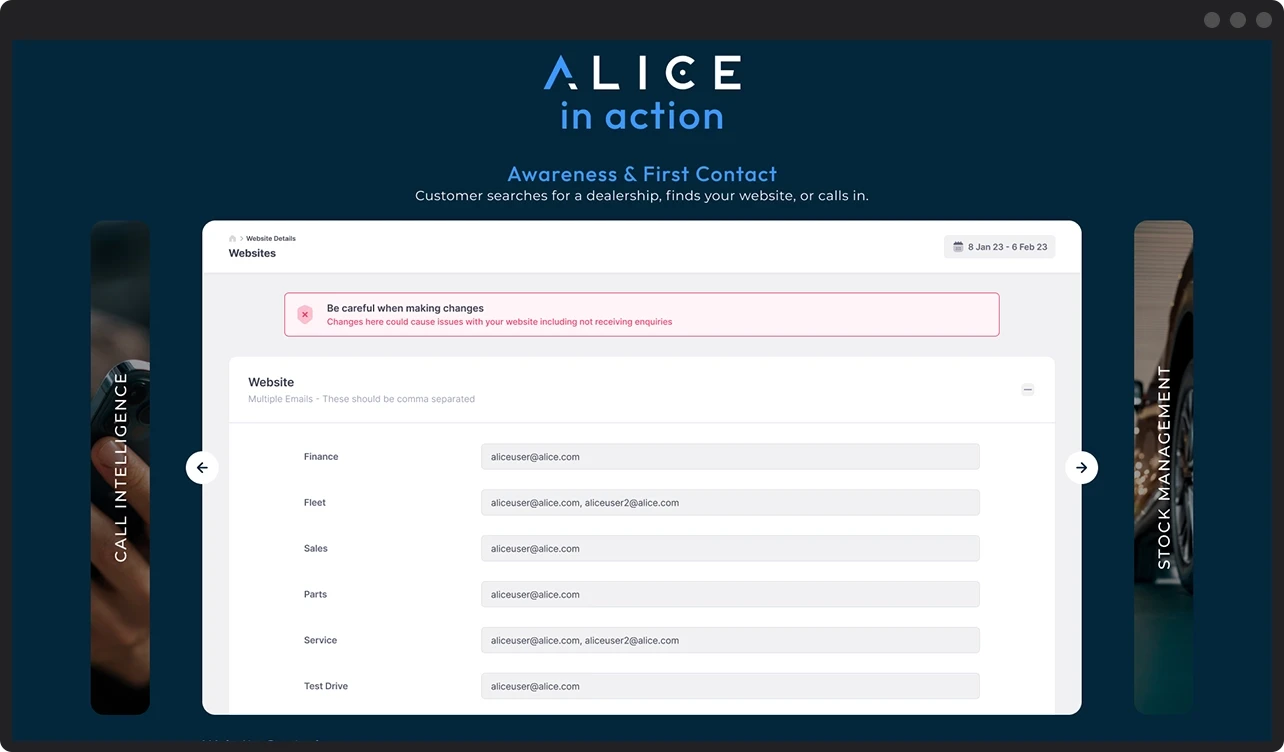
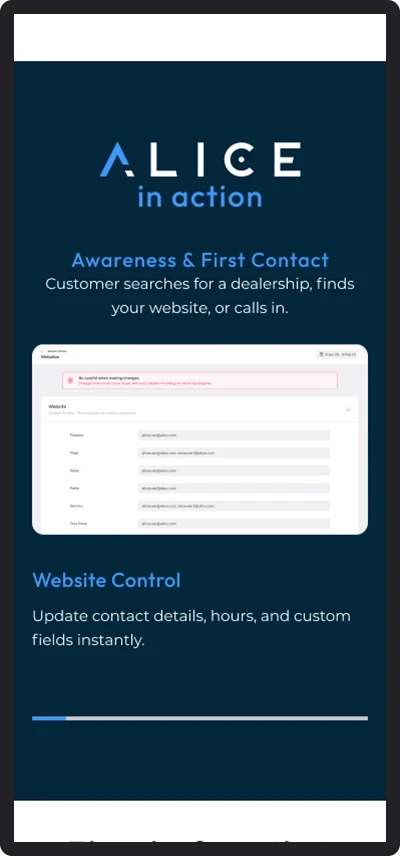
Instead of just listing features, I used bold visuals to show "Alice in Action." This lets a dealer see the ROI and the results immediately, rather than making them read a wall of text to figure out the value.
Connecting the Dots
Bringing the abstract shapes from the login screen into the marketing site created a nice bit of continuity. It makes the transition from "browsing the site" to "using the app" feel like one seamless experience.
Guiding the Eye
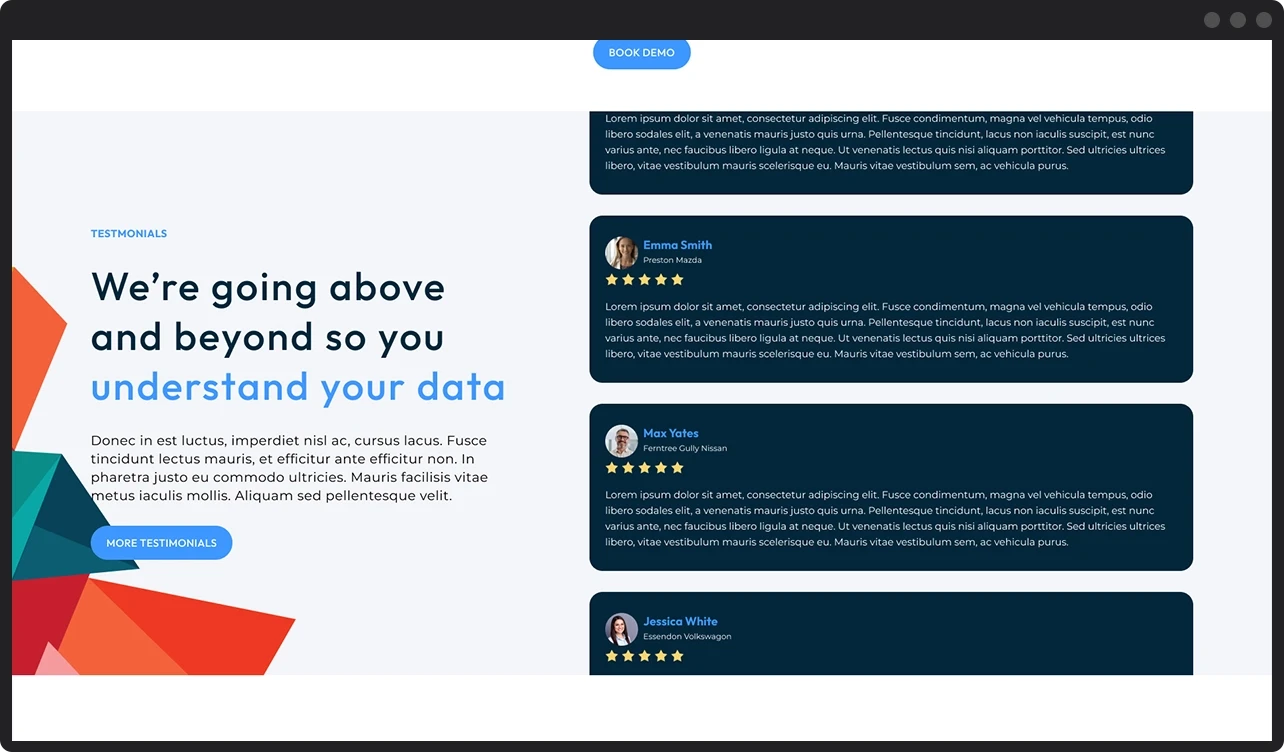
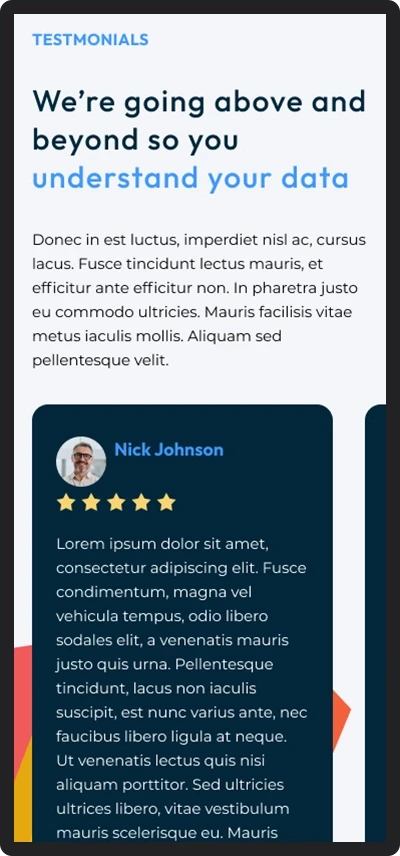
I used oversized type and plenty of breathing room to make the page scannable. Dealership owners are busy, so the layout ensures they hit the big wins and key benefits without having to hunt for them.
Current Status - Final Design concept
I was given a solid outline of what was needed and built a high-fidelity UI to match those requirements. However, the live implementation was gutted post-handover as the content strategy didn't quite keep pace with the design. I’m showcasing the full concept here, as it’s the only version that actually reflects the original goal.